There's only so many seats, which means the prices can rise again because there's a restricted supply.
You can stream almost any song ever recorded for a few dollars a month. Seeing the person who made it, live, can cost more than a year of that subscription. Same artist, same songs. Wildly different price. It comes up a lot on TheBigDA, because Dan can't resist turning a conversation about art into a conversation about economics. His explanation is one word: scarcity.
When Everything Can Be Copied
On a recent episode with actor, director and producer Anna Campbell, Dan walked through what technology did to entertainment. Once anyone could stream anything, the industry started churning out content until supply swamped demand.
"The demand for movies is so oversupplied that the value of everything is zero, basically," he said. "You make a video on YouTube and it gets a million views. Well, who cares?"
When something can be copied endlessly, each copy is worth less. That's not cynicism. That's supply and demand.
Music Felt It First
The music business hit that wall before film did. CDs disappeared, and with them a whole revenue stream.
So the industry leaned into the one thing that can't be copied. "Live events became bigger and bigger and bigger," Dan said. "And then of course the price of live events went up. And the good thing about live events is there's only so many seats."
If people are willing to physically move their bodies into a room, the room has limits. "There's only so many seats, which means the prices can rise again because there's a restricted supply."
The Definition of Scarcity
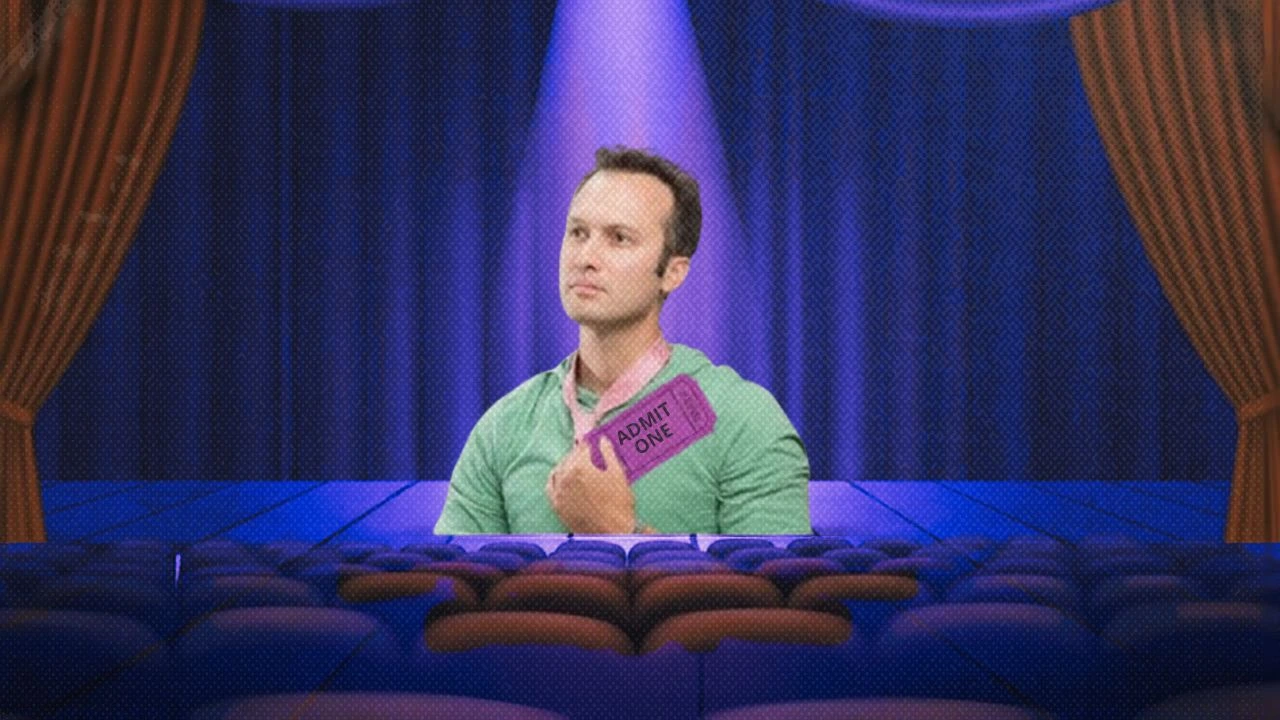
Theater is the extreme version. On another episode, Kelly pointed out what makes live theater so bittersweet for the people who make it: it only exists in the moment it happens. A painting hangs on a wall. A film gets distributed. A play closes, and it's gone.
Dan's answer: "That would be the definition of scarcity." For the people who were in the room, it becomes something they'll never forget, a thing that "can never be sold or transferred."
Joey, who has spent decades on stage, had the obvious reply: "I wish I could still make money on it."
That's the tension. The same thing that makes live performance valuable is what makes it hard to earn a living from. As Dan put it, theater is "less economically viable than other forms of creative endeavor, just because of the very nature of what it is. But the irony is the very nature of what it is is what makes it interesting and what makes people want to go there."
A Hundred Seats Is a Math Problem
Dan has a theater background himself, from his years in Chicago, and he remembers producers who staged new show after new show. Some of those shows worked. But instead of growing the ones that worked, they moved on to the next small production.
"If you only have a hundred seats in a house, there's just not enough seats, unless you're gonna charge like a thousand dollars a ticket to make a living from it," he said. "The math just doesn't work."
His view is that the first small show is research and development. The scale is where you make the money, not the first little show.
Scarce and Scalable
Anna offered a way through. She described going to see Hadestown, the Broadway musical, in a movie theater, where a filmed version of the stage production was screened. She loved it so much she went back the same day with her daughter.
The filmed version found a second audience without replacing the live one. If anything, she argued, it makes people more likely to want to see it live. The scarce thing stays scarce. A scalable version brings in people who would never have known it existed.
What This Means Outside the Theater
You don't have to work in entertainment for this to matter. Every business has some things that can be copied and some things that can't.
- What can be copied gets priced toward zero, eventually.
- What's real, in person and unrepeatable holds its value.
- The smartest model often uses both: a scalable version that reaches people, and a scarce version that people will travel for.
It's also why we still believe in small rooms and real conversations. Some things are worth more because there's only one of them.
We take money seriously. We just don't take ourselves too seriously.