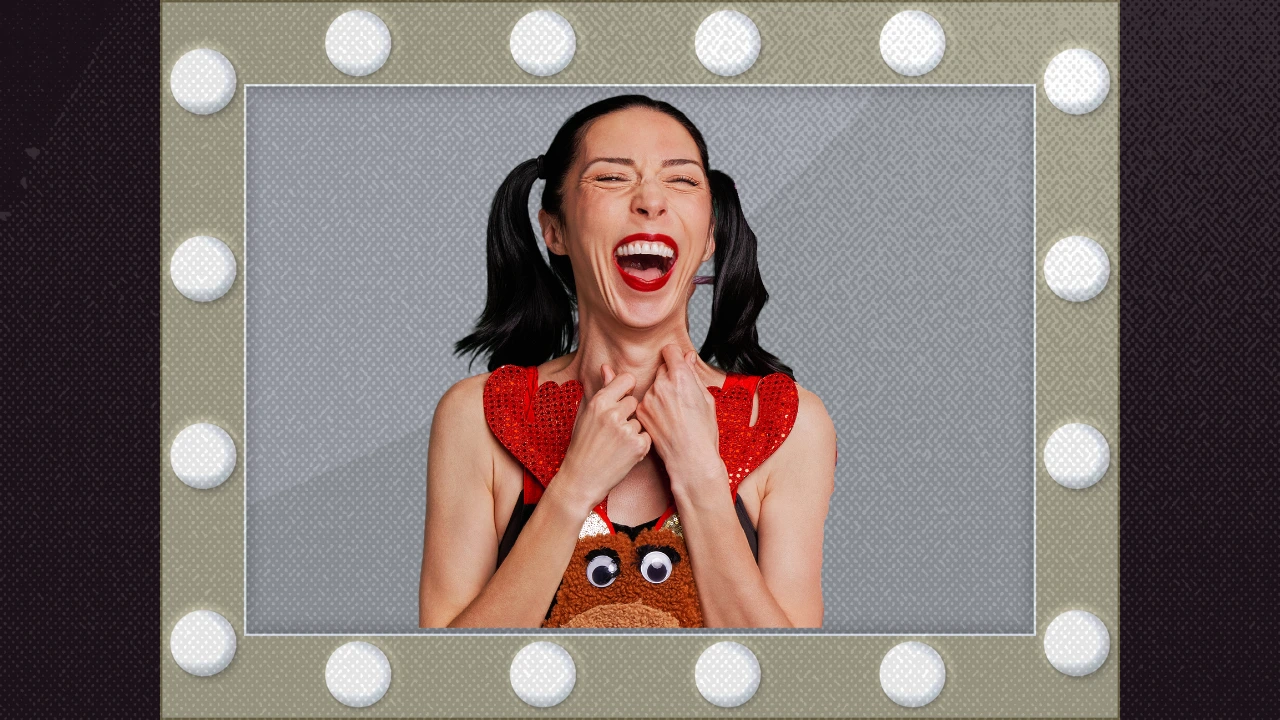
I thought I wanted to make people look their best. By the end of my years as a makeup artist, what I wanted most was to make people FEEL their best.
Editor's Note: Joey Parsons is co-host of the thebigda Podcast, where she and Dan Abbate explore authenticity, creativity, personal growth, and the often messy journey of becoming who we're meant to be.
From the Trading Floor to the Makeup Chair
I started doing makeup twenty-five years ago shortly after I moved to New York City. I had been working a soul-sucking job on the trading floor of a colossal bank and was desperate to get out. A friend of a friend worked as a makeup artist at one of the top headshot companies in the city and was about to leave for a new life in LA. Years of fashion magazine hoarding had forged a deep interest in makeup, but I had zero professional experience. I fibbed my way into a tryout, and then a job that basically funded my life for two decades.
Through all my years of performance in high school and college as a dancer and actress, I'd learned a thing or two, and as a visual artist I had a good eye. A blank canvas makes my creativity flat-line. But a face? I know where to begin.
I thrived collaborating with a photographer and a client. It was steady, but not nine to five. Not behind a desk. Not waiting tables. It was something creative and interesting and outside the box. And flexible enough to let me leave for acting jobs.
The setup was this: I’d show up first, top of day. I'd open up the studio, turn on the music, set up my tools and welcome the first client of the day. For the first hour it was just she and I. The photographer would show up an hour later as I was finishing up makeup and hair so they could start their portion of the process.
The Intimacy of Strangers
I loved that first hour. Just me and the client. Me and a new person.
Imagine someone examining and touching and staring at your face for upwards of an hour.
It's not easy, and walking into something like that is daunting.
I became a sort of pseudo therapist. A neighborhood bartender, if you will. (Who was it that spoke of the intimacy of strangers? Was it Hemingway? Nope. Just looked it up. I’m thinking of F. Scott Fitzgerald.)
There's something very intimate about being forced to sit still, to be scrutinized by a stranger, giving over trust and faith and hope.
I discovered I was good at getting people to open up. I had three or four set questions to ask. Basic things. “Where did you come from today?” “Have you seen any movies recently?” “What are you reading?” “What music are you listening to now?”
More often than not, a few simple questions opened up a host of conversations, and sometimes those conversations went deep. I'd learn about relationships, deaths in the family, breakups and heartaches, recent triumphs, recent failures. I felt truly privileged to know someone so deeply so quickly. Half the time we'd finish a session and I'd feel a twinge of guilt asking for payment because I'd had such a great time too.
Why Women Apologize for Taking Up Space
One thing I learned — and I've tried to carry this with me — is that women apologize a lot for simply taking up space in the room. Ninety-eight percent of the time a woman would plop into my makeup chair and immediately begin apologizing for eye bags, for a recent breakout, for lack of time to dye her roots. I'd assure each woman that by the end of the session they'd feel great about themselves, and most of the time they did.
I thought I wanted to make people look their best. By the end of my years as a makeup artist, what I wanted most was to make people FEEL their best.
The Model Who Wouldn't Come Out of Her Shell
I remember one day very clearly. The morning client arrived — a model from a preeminent agency. She walked in the door and I thought, Oh, this will be a breeze. She was stunning. Smooth skin. Glowing eyes. Big, glossy hair. It seemed my work would be minimal.
But I soon found I was having trouble. She wouldn't come out of her shell. I asked my standard questions and received one-word answers. I felt like I was interviewing her somehow, and it became uncomfortable.
I never coaxed that woman out of her shell. She didn’t feel like engaging, and that was absolutely her right. But the whole shoot felt cold and blocked and not very successful despite the efforts of myself and the talented photographer.
The Comedienne Who Brought Her Whole Self
Later, the afternoon client arrived. A scattered, sloppily dressed comedienne. The morning had exhausted me and I thought I had my work cut out for me. But within minutes I realized this woman was beautiful.
She was kind and open. She listened. She responded. She made me laugh hard and easily. She was gorgeous because she brought her whole self to the moment.
I knew she'd have a successful shoot.
And she did.
What Presence Actually Means
Surprisingly, my biggest lesson from years of making people look their best wasn’t the art of makeup itself. This job, where I enjoyed helping people relax into themselves, taught me more about the power of presence more than any professional acting program ever could…
Continue the Conversation
At Clotine, we're fascinated by people who choose authenticity over approval, curiosity over convention, and growth over comfort.
If this story resonated with you, you may also enjoy listening to thebigda : podcast